Collection: Saltwater Conditioning
Proper saltwater conditioning is the key to long-term success in any marine or reef aquarium. Our range of conditioning products ensures that every drop of water entering your system is free of harmful contaminants, chemically stable, and enriched with essential elements. From dechlorinators and buffers to trace element blends and ionic stabilisers, these treatments help you achieve the ideal water chemistry for coral growth and livestock health. Whether you’re preparing new water or topping up evaporation, conditioning is an essential step in maintaining a thriving saltwater ecosystem.
Proper saltwater conditioning is the key to long-term success in any marine or reef aquarium. Our range of conditioning products ensures that every drop of water entering your system is free of harmful contaminants, chemically stable, and enriched with essential elements. From dechlorinators and buffers to trace element blends and ionic stabilisers, these treatments help you achieve the ideal water chemistry for coral growth and livestock health. Whether you’re preparing new water or topping up evaporation, conditioning is an essential step in maintaining a thriving saltwater ecosystem.
Read more...Have Questions About Saltwater Conditioning?
We Have Answers.
Get quick answers to common questions about Saltwater Conditioning
What is saltwater conditioning and why is it important?
Do I need to condition RO/DI water before mixing salt?
Should I add conditioner before or after mixing salt?
How often should I condition water in a marine aquarium?
What happens if I don’t condition my saltwater?
Can I overdose saltwater conditioners or buffers?
How long should I wait after conditioning water before adding it to the tank?
Are saltwater conditioning products safe for corals and invertebrates?
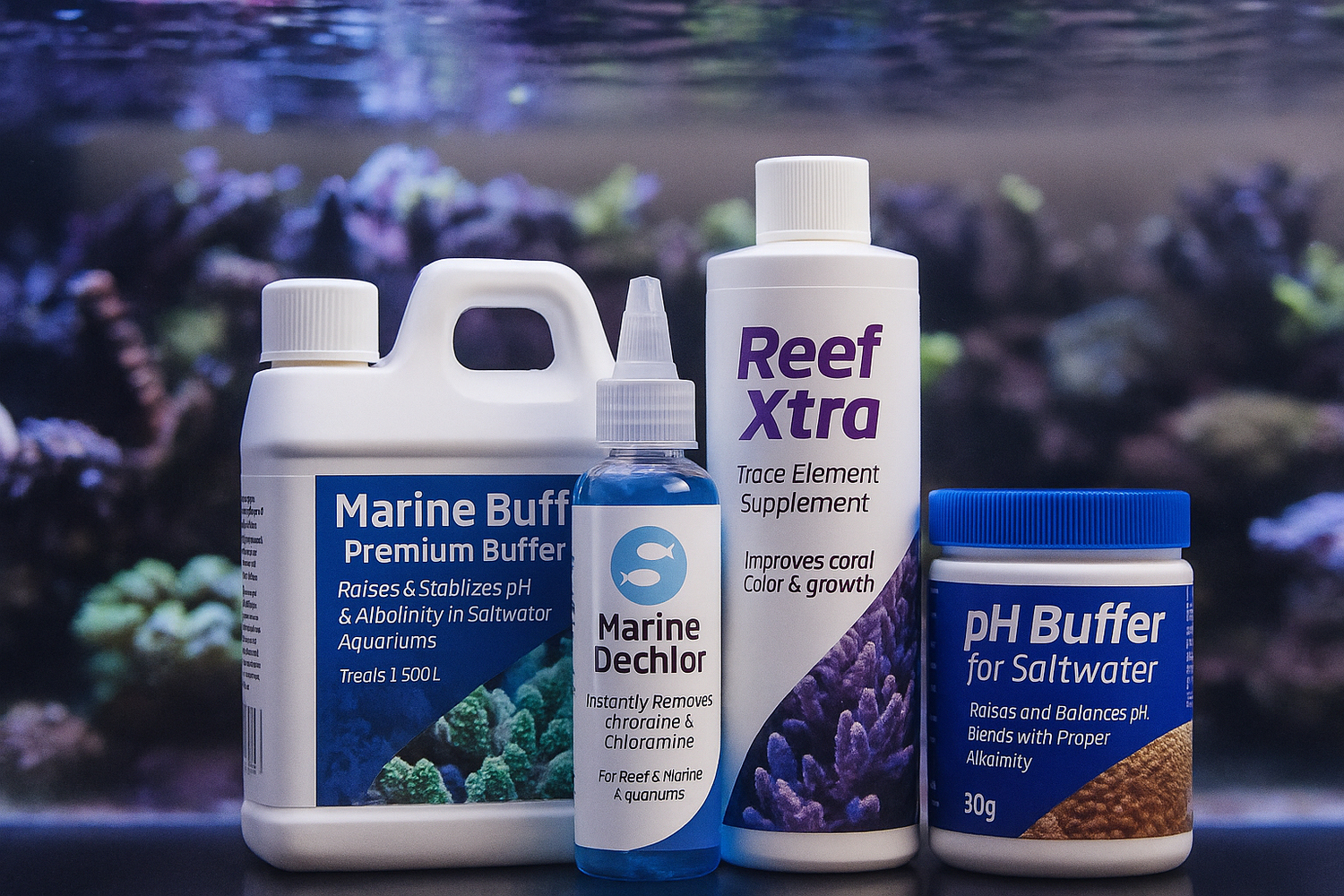
Expert Guide to Saltwater Conditioning & Marine Water Preparation
Conditioning your saltwater before it enters the aquarium is one of the most important steps in building and maintaining a healthy marine environment. Whether you’re setting up a new reef system, performing routine water changes, or topping off evaporation, proper saltwater conditioning ensures that the water chemistry in your tank remains stable, safe, and biologically supportive.
Unconditioned tap water often contains chlorine, chloramine, heavy metals, and other contaminants that can stress or even harm sensitive marine life. By using high-quality dechlorinators, detoxifiers, and trace element additives, you can neutralise harmful substances, balance alkalinity and pH, and restore essential minerals that corals and invertebrates depend on.
Beyond simple detoxification, conditioning water is also about precision. Products such as alkalinity buffers, ionic stabilisers, and trace mineral blends help maintain consistent water parameters — an essential factor for coral growth, polyp extension, and overall reef stability. These treatments are particularly valuable in systems using RO/DI water, which, while pure, is stripped of the trace elements and ions required for a thriving reef ecosystem.
From preparing base water to fine-tuning your aquarium’s chemistry, proper conditioning sets the foundation for long-term success. Explore our complete range of saltwater conditioning products, including pH buffers, stabilisers, detoxifiers, and trace element solutions — each designed to make your water reef-safe and biologically balanced. Whether you’re maintaining a mixed reef, an SPS-dominated system, or a fish-only marine tank, the right conditioning routine will help ensure the health and vitality of every inhabitant.